Lake of Tears

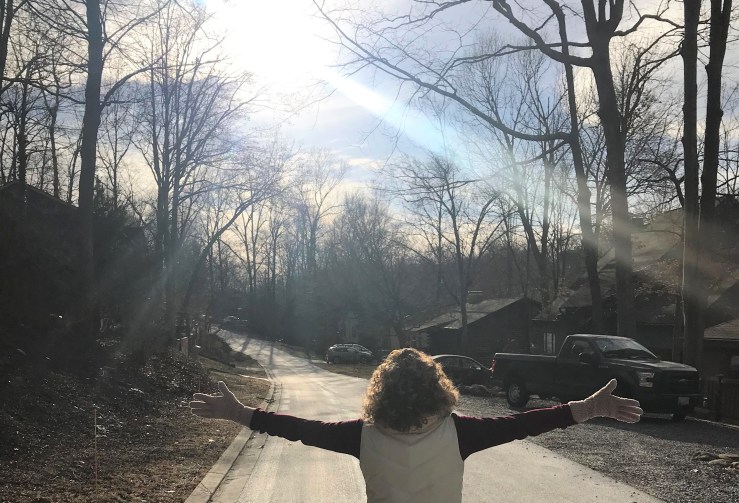
Image of geese flying over Lake Linganore in Maryland (photo effects from Nexmuse.com).

Recently I was reading through the memoir I’ve written, giving it one more light edit before sending it off to the proofreader. About halfway through, something occurred to me: I am a big crybaby.

My manuscript covers the full scope of my life, with a strong focus on my childhood, teens, and early adulthood. Apparently, those years featured a lot of bawling. Out of curiosity, I searched my document for the use of words like “cry,” “tears,” “sob,” “weep,” etc.

I found no fewer than 14 descriptions of me wailing, gasping for breath, whimpering, or blubbering. Despite my embarrassment at all this lamentation, I decided to keep each and every reference to tears in my book. Though I come across as dramatic and self-indulgent…well, that’s who I am to a certain degree.

Over the past five years, I’ve tried to interrupt this inclination to lean into my emotions, particularly the self-pitying and indignant ones. I hear a lot these days about the importance of sitting with your feelings: We are meant to feel our feelings, not run or distract from them. At the same time, it can be unhealthy to get lost in our emotions—to let them sweep us away.

Last week, I was in a yoga class, and we did a number of hip-opener poses, which can help release stored-up stress and emotion. Toward the end of class, in our next-to-last pose, I found my eyes filling up with tears. It freaked me out at first. I held back, and then when I got out to my car, I had a good little cry and got in touch with what was stirring inside me.

As I sat there, I thought about how our emotions are like water. They are important, but their power must be respected. They can overwhelm us if we aren’t careful.

The lake where I live is beautiful; it serves as a water source for our county, as a home for countless creatures, and as a place for recreation and connecting with nature. But it can also be dangerous if you don’t practice appropriate safety measures. People have died in boating, swimming, and diving accidents in this lake.

Emotions don’t often kill us, but they can swallow us up. In addition to all the crying scenes in my manuscript, I also write about my issues with anger. I have been known to let my temper get the best of me, to fight tooth and nail to win an argument. This fury can lead me to say terrible things to others, to push the most sensitive buttons of the people I love, and to act in a way that seems out of sync with my values.

So, I’ve been working on locating that fine line between exploring my feelings and drowning in them. Meditation has assisted in this effort. Spending time outdoors helps put things in perspective. And sometimes simply thinking about the impact of our emotions, as I did in the car last week, and as I’m doing right now, helps bring everything together in a lesson that’s hard to forget.

What Scary Things Can Teach Us

For the past 14 months I’ve been writing and editing a book about my life. This memoir tells the story of how self-doubt, drinking, and anxiety kept me from chasing my dreams. I am 56 years old, and this is my first full-length manuscript.

The young woman who chose creative writing as her major in college, and who relished the praise she received from her professors, would be dejected to learn that it took her more than three decades to finally write book number one.

Don’t get me wrong—I am proud of many of the things I’ve done over the years. During my most recent read-through of the manuscript, I noticed a number of times when I didn’t let fear get the best of me, when I took on challenges that were outside my comfort zone.

But those scattered moments of pluck were not enough to build a solid foundation of confidence that could sustain a writing career. It took years of self-exploration, sobriety, the death of a dear friend, and a worldwide pandemic to finally get me to draft this book.

After the writing came the endless editing. Just when I thought the revisions were done, they were not (and possibly still aren’t). Once my work was in good enough shape, I recruited people to read my manuscript to make sure I wasn’t deluded in my belief that it is worth publishing.

And, because I’ve written a book that recalls real scenes with real people whom I love and respect, I decided to reach out to some of the more prominent people to give them a chance to read the passages that involve them.

Sending your book out into the world before it’s perfect (is it ever?) is terrifying. At least it has been for me. I still have several more steps in the creative part of this process, and one of them is the most difficult step yet: talking with my mom about the chapters devoted to our complex relationship. I’ve been putting this off, and I cannot procrastinate much longer.

I know from the earlier steps I’ve already taken that I can do things that scare me. When I do scary things, I usually learn something about myself. One of the things I learn (almost every single time) is that I am brave and strong—braver and stronger than I could have imagined.

And when you keep doing things that intimidate you, you get to discover over and over how brave and strong you are. And who wouldn’t want to confirm that fact over and over? I think maybe this is a lesson we are meant to learn.

Over the past several years, I’ve taught myself that it’s ok to be frightened of doing certain things. I don’t have to pretend that I’m not scared in order to do these things—I can acknowledge my fear or discomfort and then do them anyway. An open and willing mind can lead me to take desired actions, and taking those actions produces an increasingly positive mindset.

In other words, the more I do this, the easier it gets. I only have to look back to yesterday or last week for proof that my heart can pound and my stomach can twist itself in knots and I might lose some sleep, but I will not fall apart.

Sweating the Small Stuff

My retired mom, who lives with me, came upstairs one day and told me she had had a very stressful morning. I asked her what happened, and she explained that she couldn’t find her cell phone. She looked and looked and finally realized that she had made the bed with her phone under the covers. So, she had to unmake the bed, retrieve the phone, and remake the bed. She wasn’t running late for anything, but she was huffing and puffing about what a setback this had been to her morning, and clearly it had affected her mood.

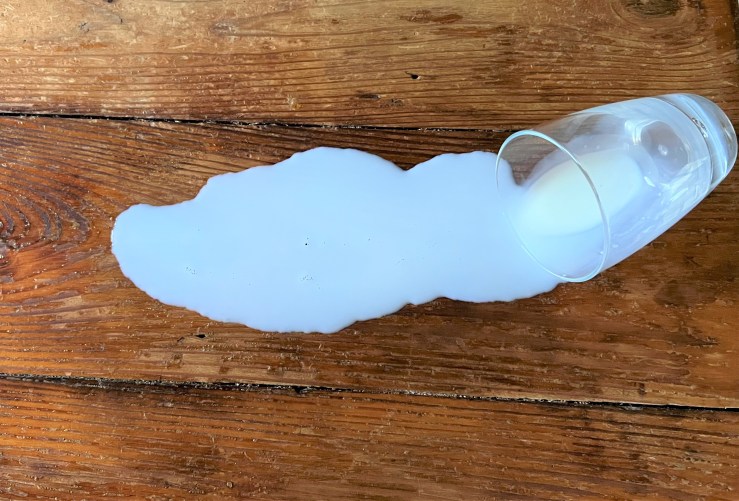
This was about 10 years ago, not long after my mom first moved in, and I remember at the time thinking that this sequence of events did not seem particularly stressful. It sounded exactly like that spilled milk we are told not to cry over. I even told this story to a co-worker and watched her eyes widen as she clearly agreed with me.

Over the past decade, I’ve thought a lot about my mom’s tendency to get flustered by life’s typical ups and downs. I reflected on how she often felt tired or unwell when I was a kid. It almost seemed like life itself was making her exhausted. Maybe because it was.

I’ve been trying to develop greater empathy for my mom, and my own current circumstances are helping me see things from a new point of view. After years of working at demanding jobs, I am currently unemployed. Now, when I get anxious, most of my stressors seem minor compared to my former work-related dilemmas.

When you’re an anxious person, like me and my mom, you often look for things to get stressed about. If you “require” a constant flow of tension in your life, your only choice is to find it among your daily experiences. The things that stress you out end up being proportionate to what you have going on in your life.

Some human beings are more sensitive when things going wrong. Even trivial mishaps and slights can mess with our day, and we want to say, “eff it.” Sometimes we do say eff it, and we give in to our worst habits and coping tools. These behaviors—like drinking, binge eating, scrolling on social media, or shopping—can be soothing in the short-term but not so efficient or healthy in the long-term.

I’m not saying we handwringers are a weak subset of people, but we react in extremes way to frustrating stuff. Some might call this a lack of resilience, but I think we’re actually a pretty resilient bunch. Maybe the issue is that we aren’t skilled at putting things in perspective, so everything feels like a good reason to throw up our arms. But I don’t think calling this a perspective problem is helpful, either, because it implies that we could get over ourselves if only we realized how insignificant our lives are in relation to others.

What if we decided, instead, that everyone’s emotional strain is valid? That stress is relative, and that’s ok. I think that’s a good start—by taking each of our anxiety levels seriously. By retiring the directive, “don’t sweat the small stuff.”

Then, if we want to diminish our reactions to stress and stop leaning on those short-term coping behaviors, we can work on that. We can take deep breaths and remind ourselves that this, too, shall pass. But, in the meantime, if we want to vent like my mom did that morning, we should do so without fear of being labeled a drama queen.

Nervous Newbie in the Room

The tag on my tea bag reads “When fear is forcing you to give up, call upon your heart’s courage to continue.” (photo effects from Nexmuse.com)

Recently I signed up for a two-week trial period at a local fitness club that offers yoga and cycle classes. I already love yoga, but I had never taken an indoor cycling (“spin”) class. The whole idea intimidated me, which was part of the appeal.

You see, for the past five years I’ve been pushing myself to try new things—not just the activities I’ve been dreaming of doing, but the ones that take me beyond my comfort zone as well.

I’m not a huge fan of riding regular bikes. As a matter of fact, last summer I dragged my unused bike out of the basement, dusted it off, and sold it on Facebook Marketplace. And I’m familiar with the stereotype of the screaming, over-caffeinated cycle instructor. So, I was really curious to see how I would take to this new form of exercise.

As I walked through the studio door to take an introductory cycle class, I felt as if the fear was written on my face, as if my every step announced that I was out of my element.

At the intro class, we were all beginners. The instructor went over terminology, how to set up our bikes, and how to position ourselves. The actual cycling was minimal—no need to worry at all!

The big challenge came a week later when I took my first regular class with experienced riders. As I struggled to adjust my seat and handlebars and get my heart rate monitor working, I was sure it was painfully obvious I didn’t know what I was doing. Ugh, I just wanted to be invisible.

How many times had I let this kind of unease with being viewed as an incompetent, clueless newbie stop me from trying something?

Later that day, I started thinking about how being seen and not seen are two sides of the same coin.

For the past year I’ve been writing a full-length memoir, and lots of memories have surfaced. As a kid, I felt like I was often ignored due to my small size and shyness. Sometimes it seemed as if the only thing worse than being disregarded was being sized up by judgmental eyes.

I think even the most introverted human wants to be noticed on occasion, with kindness if at all possible. We all want to know that we matter, that we deserve to be accepted and understood. But we can’t control how others interpret us.  

I’ve heard that you shouldn’t assume that others are gawking at you and tallying up your faults—that strangers truly don’t care that much about you. They are likely too busy thinking about themselves and their own stuff.

Still, when you are getting ready to do something scary and different, it’s like a spotlight settles upon you as each movement is magnified and time practically stands still.

I don’t have a magic solution for this predicament. The first thing to remember is that you are not alone. In my first full cycle class, the instructor could not get her music to come out of the studio speakers. Her struggle reminded me that we all have moments when things don’t go smoothly.

Even when you feel like the biggest sore thumb in the room, this too, shall pass. In several weeks or months, you will look back and grin at your frightened, novice self. With your awkward phase so fresh in your mind, you can now serve as the perfect guide for other beginners. You can tell them how pushing through those first awful moments will be so worth it in the end.

I haven’t always liked the new things that I’ve tried, but I have committed to always giving myself the chance to find out.

Are You Ready to Shine?

Basketball isn’t exactly my favorite sport, but I’m familiar with the major players. I was a big Michael Jordan fan back in the day, I’m mildly obsessed with Shaquille O’Neal, and my current faves are Bradley Beal, Steph Curry, and Kevin Durant. If one of the NBA teams from my various hometowns appears headed to the playoffs, I usually start paying attention.

So, when the New York Knicks brought backup player Jeremy Shu-How Lin off the bench in 2012, and the team proceeded to go on a thrilling run, I took notice. It’s hard to overstate the frenzy that became known as “Linsanity.” Lin was on fire, helping resuscitate the Knicks at the end of a disappointing season.  

The crowds were going nuts. Fans held up signs with playful puns on Lin’s name—like “Truly a Linderella story”—and waved giant carboard print-outs of Lin’s face. Suddenly, I was counting the minutes until the next Knicks game. The energy exploded through our television, and I found myself jumping up and cheering.

Lin was all over the local New York City newspapers. He appeared on the cover of Sports Illustrated several times, scored the cover of TIME magazine, and even had his own flavor of Ben & Jerry’s ice cream. The Knicks made it to the postseason thanks in large part to Lin’s play, but he exited prior to the playoffs due to a knee injury. Linsanity was over, but what a ride it was while it lasted.

Not to insult Lin, but I’m guessing he won’t be remembered on the same level as basketball greats like Jordan or LeBron James, or even within the next several tiers of players. But for seven glorious weeks in 2012, no one was more talked about or admired in the sports arena.

I have long enjoyed watching people excel in their chosen fields. I think most humans are drawn to dramatic success stories. Our appreciation is usually limited to those whose work takes place on the public stage—like athletes, actors, musicians, and other performing artists.

As a writer, I have struggled to come to terms with my lack of achievement. While I was in college, I came to believe that rising to the top of the literary world was essential to my sense of self-worth. Anything less would indicate that I was inadequate. Instead of working hard to prove that I was more than adequate, I simply gave up under my own judgmental eye.

These days, I’m comfortable admitting that it’s a long shot I’ll ever be a famous, decorated author. Very few people get to sit atop the heap. But I do believe that Linsanity-like moments of transcendence are available to us all, regardless of who we are or what we do.

I’m talking about experiences where everything comes together, when you’re in a groove and it just feels right.

Here’s a real-time example: I wrote a full-length memoir recently. After thoroughly editing it twice, I recruited some test readers to determine if I have something worth publishing. Despite my fears, I took a deep breath and hit send on a series of emails. The comments have started coming in, and I’ve had conversations with several readers.

For someone who less than five years ago thought she had given up on her writing for good, it sure is a bizarre feeling to discuss your manuscript with someone, to hear what passages touched them and what made them laugh. Maybe this book won’t be read by more than a handful of people, but the experience of having it reflected back to me by someone else has been priceless. I imagine it’s a little like having a crowd painting your name on signs and screaming for you.  

A New York Times article reported how Lin was “underestimated and overlooked” for years and credited his breakthrough with the Knicks to his “perseverance, hard work and self-belief.”

You have to be open to the possibility of channeling Linsanity. You have to put yourself out there. You have to let the coach of the universe know that you’re ready to shine.

Stepping up to the line is scary. Going for a promotion, taking your first-ever ballroom dance class, heck, even attending a party after these long lockdowns—challenges of any size can be intimidating.  

But if you can get past the assumption that being “the best” is the only trophy worth having, then you can bask in your own personal breakthroughs.

Hokey and Proud

The wall above my desk is super cheesy, eh?

I just wrote a book—a full-on 64,000-plus word book! The process started last September, and it took me five months to finish the first draft. Then, I needed three months to complete two extremely thorough edits. Yesterday, I sent the manuscript out to some trusted folks to give it a read and let me know if I have something worth publishing.

For a person with a history of anxiety and catastrophizing, this is a big leap. Especially since the book is about my self-doubt—how I came to have it, how it held me back, and how I am finally moving past it.

I have much trepidation about the forthcoming responses from my test readers. Amongst my many fears is the sinking feeling that this memoir reveals me to be hopelessly trite. And I don’t think I’m alone in preferring not to be associated with that trait.

Call it what you like—hokey, cheesy, corny, sentimental, earnest—it’s a quality that our society doesn’t typically value, at least not proudly. These words might mean slightly different things, but I think they all imply a certain softness, and being soft marks us as vulnerable.

On the Ten Percent Happier meditation app (which I use faithfully), co-founder and journalist Dan Harris has referred to his aversion to coming across as cheesy. It’s helpful to know that someone as successful as Harris struggles with the connotations of this label.

I’ve come up with some examples from my own life to help illustrate what I’m talking about here. I think you will agree that some of this stuff is pretty embarrassing:

Hokey – Making up a song about our dog, sung to the tune of Boogie Woogie Bugle Boy

Cheesy – Clapping along with an audience on TV (I get this from my mom)

Corny – Using sayings like “good golly!” and “holy guacamole!”

Goofy – Dancing down an empty aisle at the grocery store

Sentimental – Crying while watching This Is Us

Treacly – Crying while watching Top Chef’s Restaurant Week (it was soooo good this season)!

Trite – Hanging inspirational quotes, like “enjoy the journey,” on the wall above my desk

Earnest – Believing an “angel” in human form was sent to save me at just the right time

As I typed this list, it occurred to me that these behaviors and emotions are coded (at least partly) as feminine and/or young. Our culture tends to idolize femininity and youth, but we don’t seem to respect them. There is a delicacy that makes femininity and youth special but not dignified.

Dignity, on the other hand, is a characteristic that conveys strength and power, which is coded as masculine and mature. I’m not saying I agree with the associations of these words as being female or male, or that one or the other is necessarily good or bad. I just wish we could get beyond the kinds of simplistic characterizations that hem us in and make us anxious.

Personally, I don’t think there’s anything wrong with being soft. We are all fragile sometimes. And if we’re lucky, we feel free to act silly when the mood strikes us. I don’t think anyone is immune to these attributes—it’s just a question of whether we are in touch with them and can embrace them.

If my book, and by extension me, turns out to be sappy, I will wear that badge proudly.  

The Next Best Thing to Stopping Time

At least once a week I grumble to myself, “I wish I could make time stand still. Why can’t the world stop spinning for just one day?” Then, I picture people freezing in place while I get caught up on my errands, so that I can eventually unwind.

That word eventually is key. For some reason, my brain is convinced that I can’t truly enjoy relaxing or doing something fun unless I have nothing important hanging over my head. And my definition of important is generous, so it’s darn near impossible to achieve the state of tranquility I’m seeking.

I might even delay going to the bathroom in order to put on a load of laundry, answer a couple emails, and wash a few dishes—until my bladder is about to burst.

A couple weeks ago I was standing in the kitchen, agitated about something, when I said it again: “I wish I could stop time.”

Instead of bemoaning my lack of magical powers, I decided to explore that yearning.

For as long as I can remember, being responsible has felt like carrying a backpack full of bricks that I cannot put down. Those bricks represent all the things I need to do or think I should do, plus my concern with performing each task to a precise standard.

While I was pondering this self-oppressing sense of obligation, I remembered that I was about to celebrate four years of sobriety on May 12. Aha! The connection between the two emerged in a flash.

For decades, I used drinking to stop time. Not really, of course— I know alcohol doesn’t prevent time from moving forward. But consuming vast quantities of it puts you in a bubble of sorts where time marches on around you, but you stand blissfully still.

I thought about all the times that alcohol allowed me to switch off my brain and cast time aside. I might be out at a restaurant with my husband waiting for a table, but as long as we were having drinks at the bar, the time ticking away didn’t seem so bad.

Or, I might be hanging with friends, and as the booze took hold, we didn’t care that we had some place else to be (including bed). All that mattered was the alcohol-induced timeline we were inhabiting and the way it was slowing down and stretching out endlessly.

If I came home from a stressful day at work, sitting on the couch with a glass of wine that I kept refilling made the night feel longer, looser.

Stopping time with alcohol worked temporarily, but it introduced its own set of problems—not the least of which was a net increase in my anxiety rather than a decrease.

In the years since my last drink, I’ve found healthier ways to relieve my stress—I write a lot about those strategies here on my blog.

And without realizing it, I’ve also been experimenting with pausing the world. I discovered that Pilates, yoga, hiking, kayaking, and paddle boarding give the over-thinking part of my brain a breather. Engaging in these activities truly is the next best thing to stopping time.

Removing alcohol from your life is not the final answer. Being sober is for figuring things out. Every year or so, a new question or a new answer presents itself.

So, this year I’ve acknowledged that only I can grant myself permission to chill and have fun without running through a gauntlet of chores first. And finding healthy ways to slip from the mental bounds of time is critical to my well-being.

Seeking Self-Worth in Unemployment

Watching something you created come off a giant printing press is pretty thrilling.

The original “Party of Five” television series ended in 2000, when I was 34 years old. In one of the final episodes, the character Julia (played by Neve Campbell) can be seen reading a copy of the National NOW Times, a newspaper that I edited and produced for the National Organization for Women.

Someone from the show had reached out to us for materials, but I had no way of knowing if they were going to use anything. I literally squealed when I saw it. Something I had created had appeared, if only fleetingly, on TV. After years of coveting public acclaim, I was fame-adjacent!

Twenty-one years later, I am 55 and unemployed. A couple days ago I saw a news segment about how women have been leaving the paid workforce in droves during the pandemic, and a sense of sadness washed over me.

March 13 marks one year that I’ve been out of work. Unlike so many others, I did not lose my job due to COVID (though it may have happened eventually, had I stayed). Before the lockdowns started, I made the decision to resign because I was buckling under the pressure of looking after my mother while trying to work a part-time job that could not be done from home.

Thankfully, my husband was willing to see if we could make things work on his salary alone. It’s not like I was making much money, anyway. The bigger sacrifice, financially, had been two years earlier when my mom first went on dialysis and I exited a full-time marketing job that was satisfying and paid pretty well.

So, here I am, having scaled back first to a minimum-wage job and then to nothing. I shouldn’t say nothing. I am a caretaker for my 81-year-old mom, who no longer drives and has multiple health conditions. There is honor in this role. But a large part of my identity was wrapped up in earning pay and accolades for my vocation.

After college, I discovered that working hard and winning promotions could provide much-needed boosts to my self-confidence. Work became the arena where I proved to myself that I was smart and capable and resourceful. I particularly liked producing print publications that I could hold in my hands.

But after 30 years of working in offices, it turns out I was relieved to step off the management track. I no longer hungered for higher titles and increased responsibility. I just wanted to do what I was good at without having to constantly prove I hadn’t grown complacent.

I come here to confess my complicated feelings about paid work—fears and insecurities that others may share. I didn’t appreciate being constantly evaluated, and though I enjoyed collaborating with people, I resented that supervising larger and larger teams and then departments is a necessary means to moving ahead in so many fields.

As a feminist, I find it embarrassing that I like not working right now. With less pressure and expectations, my anxiety has decreased. I have been able to explore other interests and interview my mom for the memoir I’m writing.

And yet, I’m not sure who I am without a regular paycheck for my efforts, without a boss to praise me. I worry that depending on my husband financially betrays my values and makes me uninteresting.

I also fret that the longer I stay out of the workforce at my age, the harder it’s going to be to reenter if and when I need to—this concern has produced some sleepless nights.

Will my personal writing save my dignity? Stay tuned.

Rooftops and Control Issues

Years ago, when I lived in New York City, I used to visit friends in Brooklyn. This couple lived in an apartment building that was about five or six stories tall, and they had access to the roof. Hanging out on their roof offered a dramatic view of the Manhattan skyline.

Whenever we were up on that roof, taking in the towering skyscrapers, I kept my distance from the edge of the building. If I stood within a couple feet of the edge, I felt as if I might go flying right off.

I had no desire to jump, and my friends weren’t prone to violence or stupid stunts, so the chance of falling from their roof was remote. But it terrified me, nonetheless. If I did inch toward the edge, my heart started thumping and my stomach twisted, as if I were on a tightrope instead of a solid surface.

Since I was a kid, I’ve been afraid of my life spiraling out of control. For decades I struggled to feel secure about my safety, health, finances, friendships, relationships, even my mental stability.

My mind would go from zero to 60 in an instant. A sharp pain in my back was probably cancer, an overdrawn bank account would lead to financial ruin, a missed deadline meant I was about to get fired.

Clearly, I had issues with control. My brain always craved more.

No one wants less control over their lives, right? We expect a certain measure of control over the basics—where we live, what we eat, whom we love, how we dress, what we read, when or if we have a family, how or if we worship. When those options are blocked, we get our backs up, and rightly so.

But for some folks, a generally accepted level of control is inadequate. It’s too slippery, too treacherous.

Control is a funny thing. I could argue that we have way more control over our lives than we realize, and I would be right. I could also make a compelling argument that we have far less power than we think and be correct. Like a kaleidoscope, our ability to control our lives is constantly shifting due to all the moving parts.

How can we panicky people accept the randomness of human existence? I’ve decided to focus on the control that I do have. I am scouring my days, looking for parcels of time that I can affect. The simple act of pausing and choosing one thing over another instead of running on auto-pilot is surprisingly empowering.

Instead of watching cable news, I can read. In the first 62 days of 2021, I completed six books, which is the same number I read all last year.

Rather than getting lost in YouTube videos, I can write in my journal. I’ve never been much of a journal keeper, but this year I am using a book with prompts and have filled 40 typed pages thus far.

When I have 10 minutes here or there, instead of scrolling through social media, I can meditate.

Instead of doing busywork (like organizing my closet or writing out detailed to-do lists), I can take a walk or do yoga or brainstorm small business ideas.

Big actions can help clear the decks for the smaller stuff. I chose to quit drinking nearly four years ago, which was a huge power move. That decision opened up vast amounts of time in my life.

The results have been promising. The more control I exert over my days, the less I worry about my life blowing away from me.

It’s Not You, It’s Me: One Year Since Losing a Friend

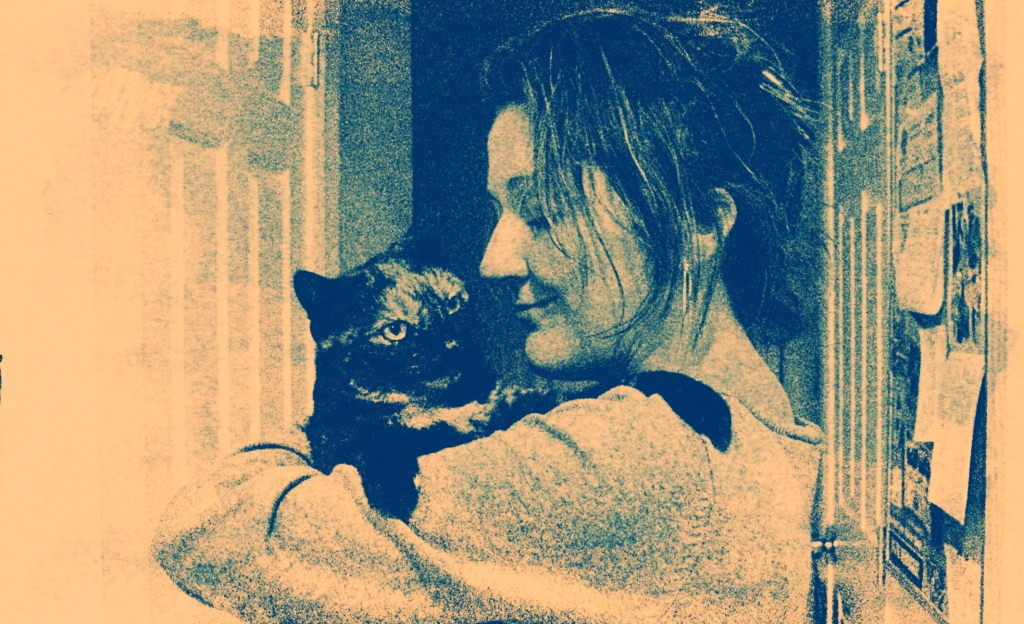
Tami and my cat Gretchen

About 10 years ago my friend Tami and I were in the basement of my townhouse so that she could visit with my cat Gretchen. My other cat, Mo, was up on the main floor. The two cats had become incompatible, so my husband and I were rotating them every 24 hours, and it was Gretty’s turn to be in the basement (which I would like to point out was a finished and relatively pleasant basement).

Tami was holding Gretty, and she looked at me and said, “You know, this situation with the cats is more about you than it is about them.”

I was flabbergasted. My reply was weak and forgettable—probably something like, “Um, ok, whatever you say.” Then I changed the subject because I did not want to argue with her.

Over the years since that trivial incident, I have crafted sassier comebacks in my head—none particularly worth sharing. I’m not sure why that remark bothered me so much. Now that Tami is gone, having passed away a year ago today, it still lingers in my mind alongside weightier memories.

A woman in my grief group told us how her therapist often asks, “Why do you think that bothers you so much?”

So, I’ve asked myself that question. Why did her comment bother me so much that I still recall it clearly ten years later? The answer is that Tami was at least partly right. When the cats would fight, I couldn’t bear to hear Gretty’s cries—she sounded like she was seeing the very gates to hell. That sound made my bones ache. I did not have the guts to let the cats duke it out and settle their conflict.

A reunion did happen gradually and by accident, as people came over and left the basement door open. For a couple blissful months, the cats coexisted again. And then Mo startled Gretty one day, and the truce was over. Sometimes Gretty would pee on the floor when she was afraid of Mo, so I don’t think the decision to keep the cats apart was entirely about my own neurotic tendencies.

Tami’s remark to me that day echoes as I grieve her loss. Her death haunts me, as the unexpected death of a 54-year old woman is likely to do. I am sad. I feel guilt. Most of all, I am mad. Mad at a long list of people, including her. I hate being mad at someone who I loved and who is no longer on this earth. My anger feels righteous, earned—but as Tami might argue, it really does say more about me than it does about her.

My reactions to her life choices were largely due to my own insecurities and angst. I was afraid we would lose her, and we did, but my fear did nothing to stop that.

A part of me wants to dig through both of our failings, turning them up like soil, letting them sift through my fingers as I try to glean something of use. There will be plenty of time for that later.

For today, I will say that only a friend like Tami can challenge you in that way, and I miss her dearly.